



 Polski
 English
 Italiano
 Español
 Čeština
 Српски
 Deutsch
 Ελληνικά
 Slovenský




-
€
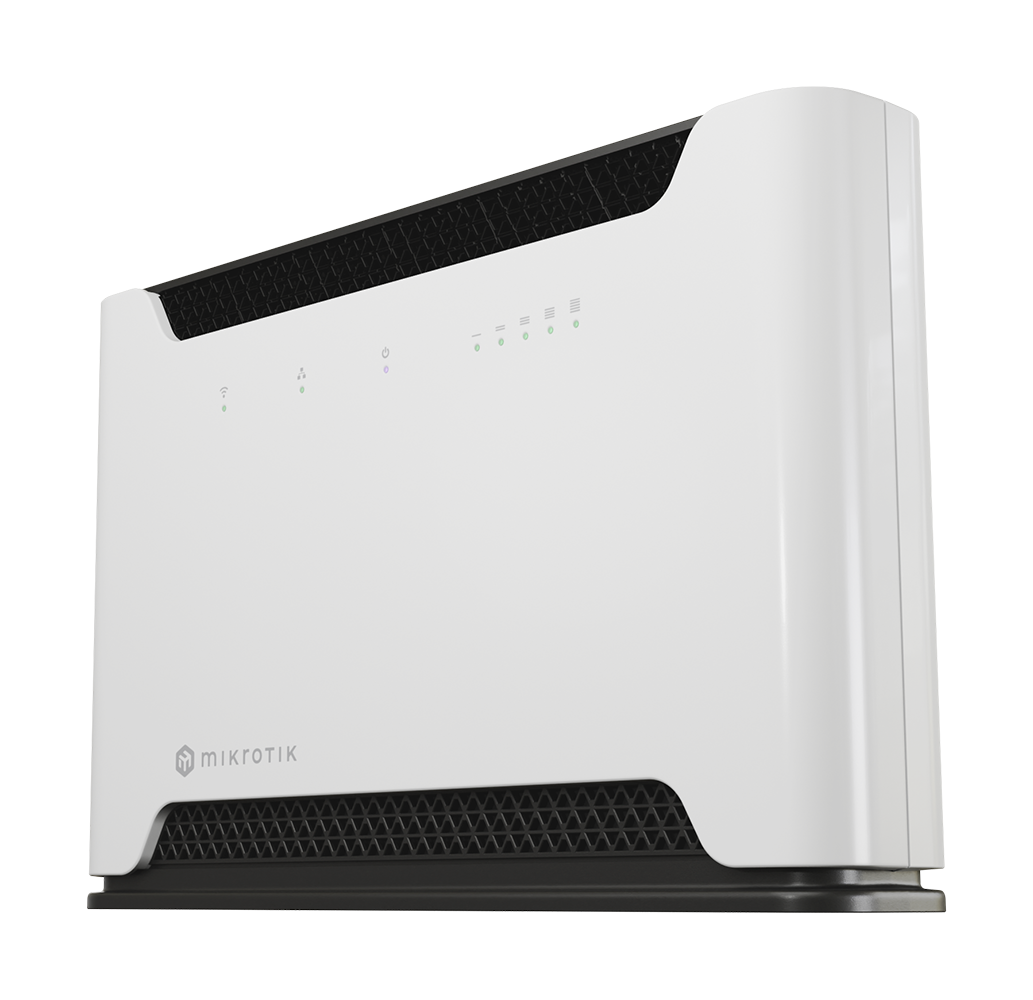
MikroTik Chateau LTE7 router LTE cat 7 Wi-Fi 5 AC1200, 5x GE
Precio
80,68 €
99,24 € IVA incluido
favoriteAñadir a la lista de deseos
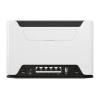
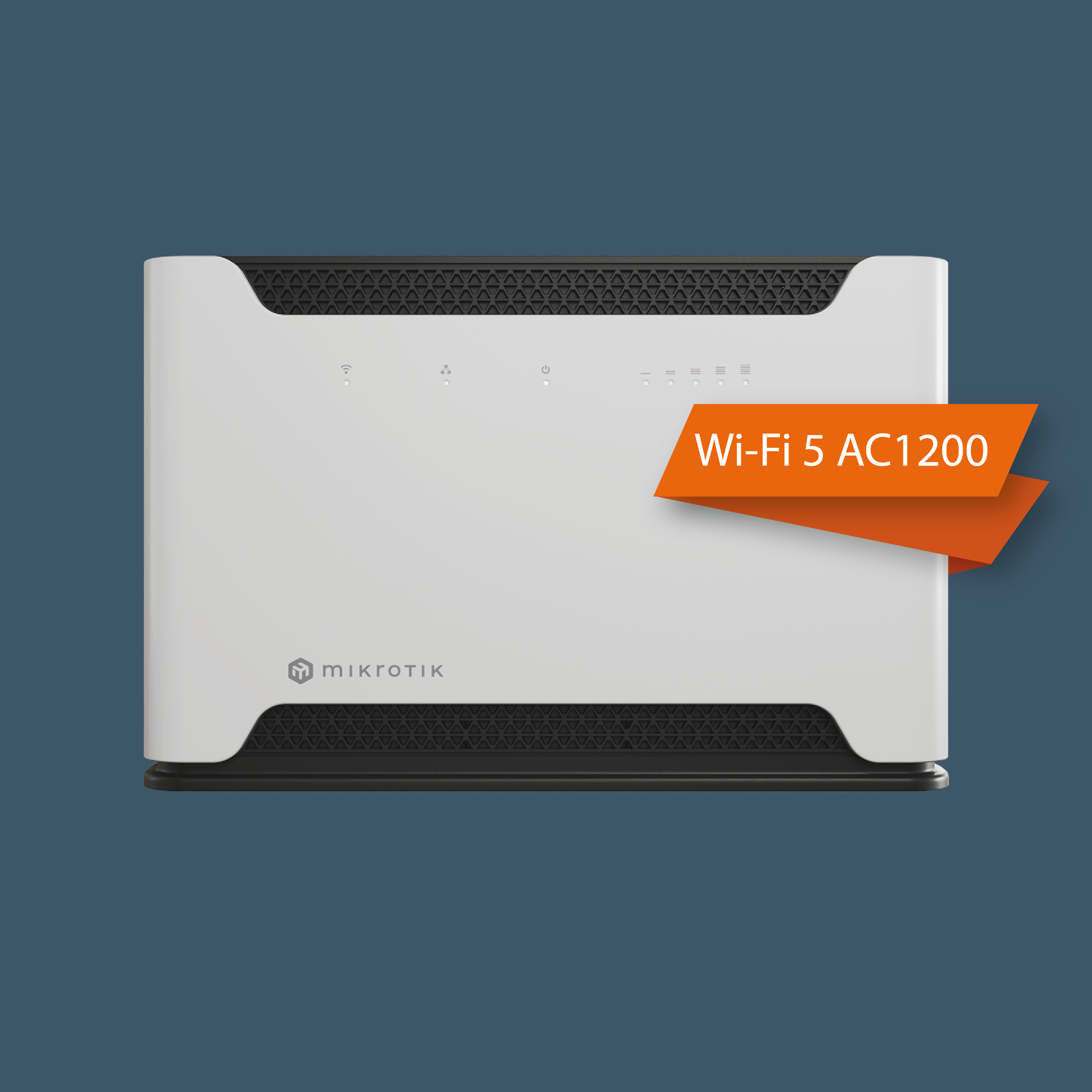
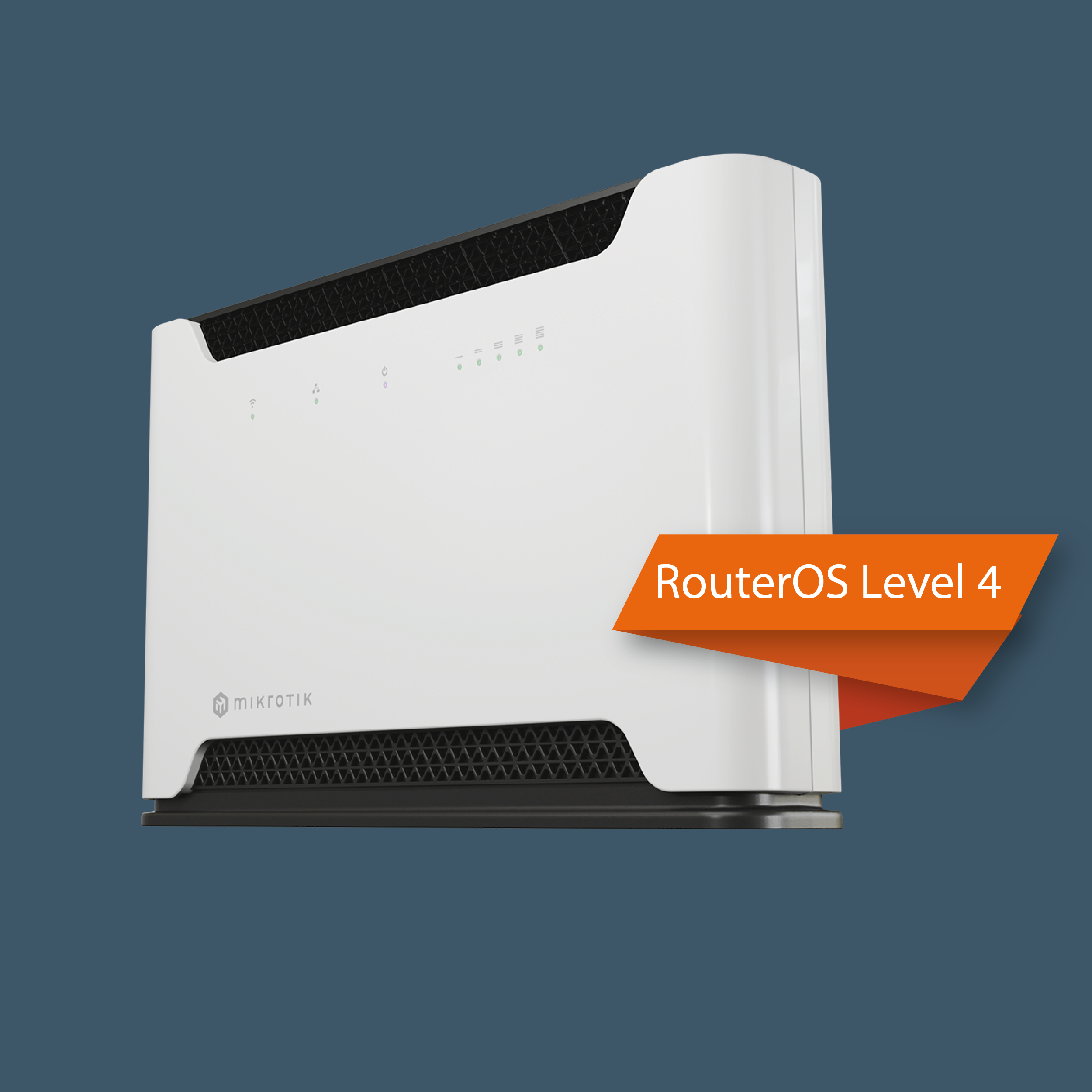
MikroTik Chateau LTE7 is a Wi-Fi 5 router equipped with a built-in LTE Cat 7 modem. It supports IEEE 802.11 b/g/n protocols in the 2.4 GHz band and IEEE 802.11 a/n/ac in the 5 GHz band, with a maximum theoretical Wi-Fi throughput of 300 Mb/s in 2.4 GHz and 867 Mb/s in 5 GHz. The LTE modem enables aggregation of up to two bands, with a maximum theoretical mobile transmission speed of 300 Mb/s for downloading and 100 Mb/s for uploading. The offered product features a higher-category modem than its predecessor, the Chateau LTE6, while also being more affordable. The router is equipped with five 1G Ethernet ports and a powerful IPQ-4019 processor (four cores, clock speeds up to 896 MHz). The preinstalled RouterOS operating system (Level 4 license) provides advanced management features, significantly richer than those offered by competing manufacturers.
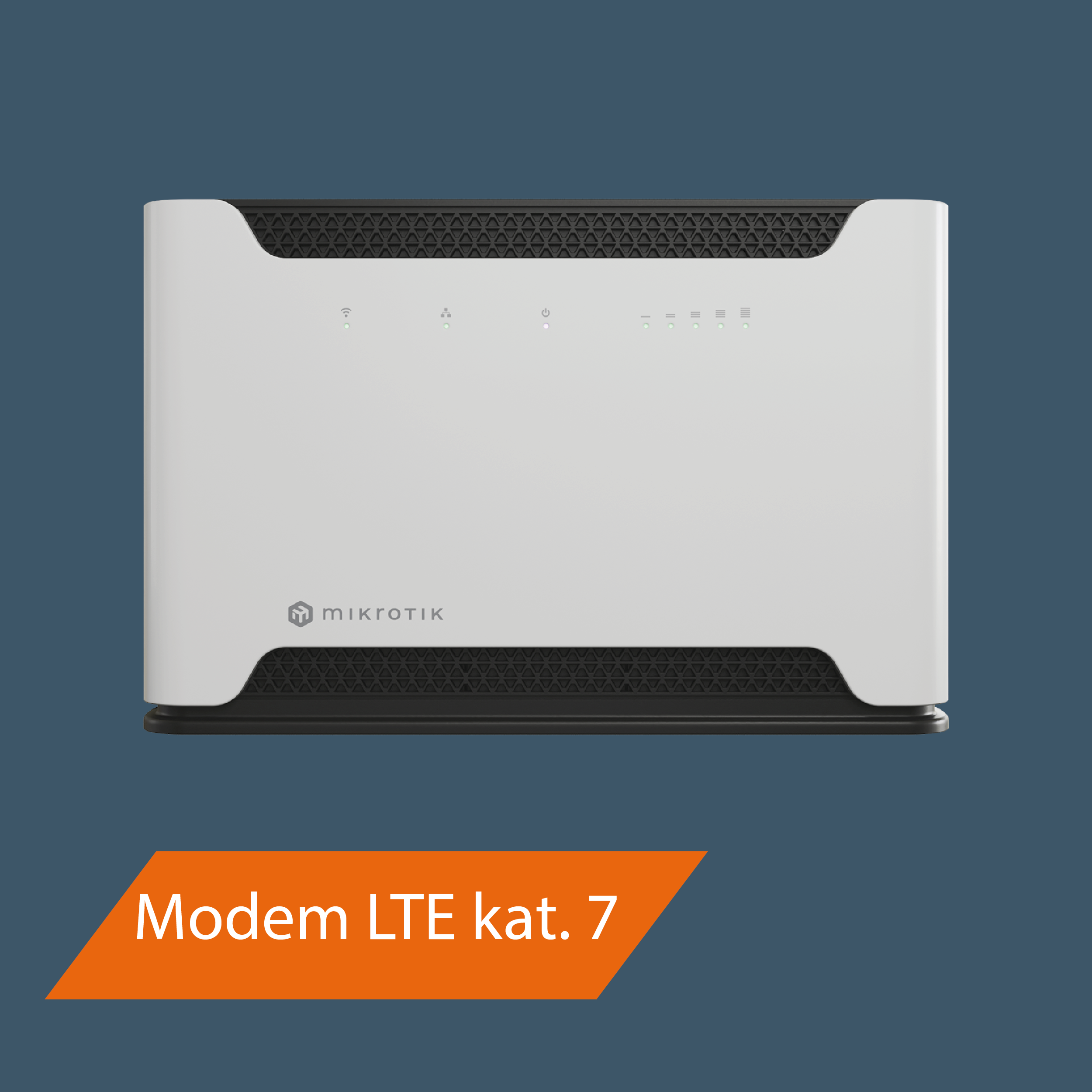
LTE Cat 7 modem
The device features a built-in LTE Cat 7 modem (R11e-LTE7), which is the direct successor to the previously used LTE Cat 6 modems (FG621-EA). It provides additional operating bands and higher theoretical throughput—300 Mb/s for downloading and 100 Mb/s for uploading. The modem supports aggregation of two transmission bands; the full list of supported bands can be found in the specification below the product description.
Wi-Fi 5 AC1200
The Chateau LTE7 can broadcast a wireless Wi-Fi network in both the 2.4 GHz and 5 GHz bands simultaneously. It supports IEEE 802.11 b/g/n protocols in the 2.4 GHz band and IEEE 802.11 a/n/ac in the 5 GHz band. The maximum theoretical transmission throughput is 300 Mb/s in 2.4 GHz and 867 Mb/s in 5 GHz. This speed is fully sufficient to take advantage of the capabilities offered by the LTE modem. It will also allow for comfortable internet use even if you rely on a traditional wired connection with your operator and treat LTE only as a backup link.
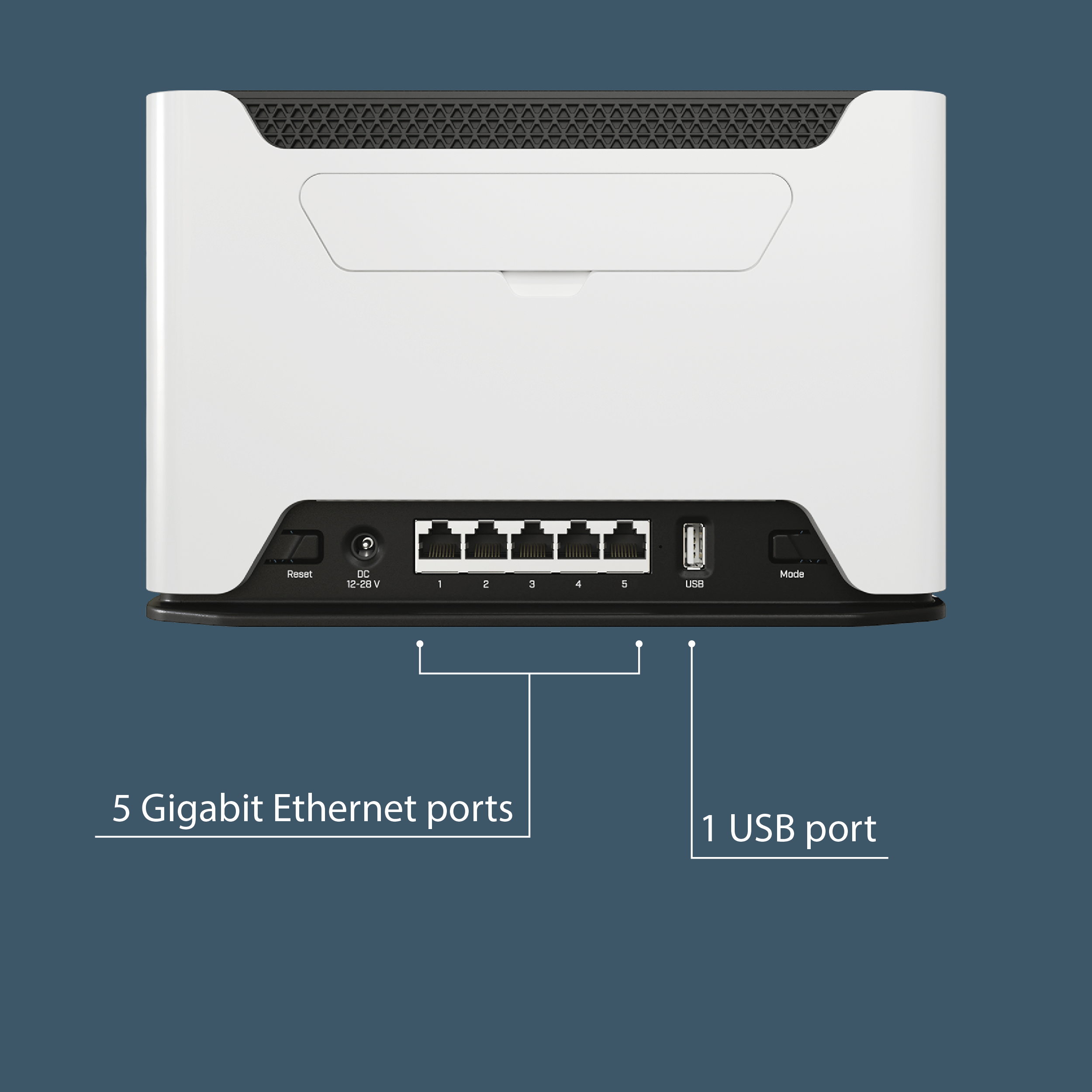
5 Gigabit Ethernet ports, 1 USB port
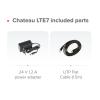
The router is equipped with 5 Gigabit Ethernet ports (10/100/1000 Mb/s). An additional advantage is the USB port, which you can use, for example, to connect external storage. The Ethernet ports can also be used as WAN ports, depending on your needs.
RouterOS Level 4 license, high performance
The device comes with a preinstalled RouterOS system with a Level 4 license. It provides advanced management features, offering significantly more capabilities than competing solutions. It also stands out in terms of performance—featuring a quad-core IPQ-4019 processor (ARM architecture) and 256 MB of DDR3L RAM. The Chateau LTE7 is an excellent solution for home use and small businesses. You can use LTE mobile transmission as the main connection or as a backup link that activates when the primary connection fails.
Specifications
| MikroTik D53G-5HacD2HnD-TC&R11e-LTE7 | ||
| CPU |
IPQ-4019 Quad-Core 448-896 MHz (auto) |
|
| CPU architecture | ARM 32bit | |
| Size of RAM | 256 MB | |
| RAM type | DDR3L | |
| Storage | 16 MB Flash | |
| Number of 1G Ethernet ports | 5 | |
| USB port | 1 (2.0 type A) | |
| Switch chip | IPQ-4019 | |
| Wireless interface model | IPQ-4019 | |
| Wireless |
2.4 GHz: IEEE 802.11 b/g/n (2x2 MIMO / dual-chain) 5 GHz: IEEE 802.11 a/n/ac (2x2 MIMO / dual-chain) |
|
| Antenna gain |
2.4 GHz: 2 dBi 5 GHz: 4 dBi |
|
| LTE category | 7 (DL: 300 Mbps; UL: 100 Mbps) | |
| LTE modem | R11e-LTE7 | |
| TAC | 35312597 | |
| MIMO DL (LTE) | 2x2 | |
| MIMO UL (LTE) | 1x1 | |
| LTE FDD bands | 1 (2100 MHz) / 3 (1800 MHz) / 5 (850 MHz) / 7 (2600 MHz) / 8 (900 MHz) / 20 (800 MHz) / 28 (700 MHz) | |
| LTE TDD bands | 38 (2600 MHz) / 40 (2300 MHz) / 41 (2500 MHz) | |
| 3G Category | R8 (DL: 42.2 Mbps; UL: 5.76 Mbps) | |
| 3G bands | 1 (2100 MHz) / 3 (1800 MHz) / 5 (850 MHz) / 8 (900 MHz) | |
| Dimensions | 240 x 156 x 44 mm | |
| Operating system | RouterOS v7, License level 4 | |
| Operating temperature | -40°C to 70°C | |
| Powering | ||
|---|---|---|
| Number of DC inputs | 1 | |
| DC jack input Voltage | 12 - 28 V | |
| Power adapter nominal voltage | 24 V | |
| Power adapter nominal current | 1,2 A | |
| Max power consumption without attachments | 16 W | |
| Max power consumption | 21 W | |
| Wireless specifications | ||
| Rate (2.4 GHz) | Tx (dBm) | Rx (dBm) |
| 1 Mb/s | 25 | -100 |
| 11 Mb/s | 25 | -94 |
| 6 Mb/s | 26 | -95 |
| 54 Mb/s | 23 | -78 |
| MCS0 | 26 | -96 |
| MCS7 | 22 | -73 |
| Rate (5 GHz) | Tx (dBm) | Rx (dBm) |
| 6 Mb/s | 26 | -96 |
| 54 Mb/s | 22 | -80 |
| MCS0 | 26 | -96 |
| MCS7 | 21 | -75 |
| MCS9 | 19 | -70 |
| Supported bands combinations | ||
| 2x CA |
B1+B1/3/5/7/8/20/28/32/40/41 (100MHz) B3+B1/3/5/7/8/20/28/32/40/41 (100MHz) B5+B1/3/5/7/28/40/41 (100MHz) B7+B1/3/5/8/20/28 B8+B1/3/7/20/32/40/41 (100MHz) B20+B1/3/7/32/38/40 B28+B1/3/5/7/32 B38+B38 B40+B40 B41+B41 (100MHz) |
|
| 2x CA (UL) |
B1+B1 B3+B3 B5+B5 B7+B7 B8+B8 B38+B38 B40+B40 B41+B41 |
|
Clientes que compraron este producto, también han comprado:
Otros productos de la misma categoría que le pueden interesar: